Ferdinando Stanley, Earl of Derby
Villain or Victim?
Chapter 4 : Conclusion
The earl’s chaplain and Secretary Golborne carried the news to London. The verdict was that he had been bewitched by persons unknown. The news made little splash down south. A warrant went out for the arrest of his Master of Horse, Richard Doughtie, a known Catholic, who had disappeared when the earl fell ill. This fitted the rumour that the Papists had threatened to kill Ferdinando if he didn’t accept their offer. In reality, Her Majesty’s council were more interested in how the Derby estates and titles were to be dealt with and whether he owed the crown money. He left his lands to his three daughters, his title went to his male heir and brother, another William. His will lists all his household officers and the sums of money to be given to them —perhaps the settlement of arrears. Before he died, he gave Dr John Case a jewel in payment.
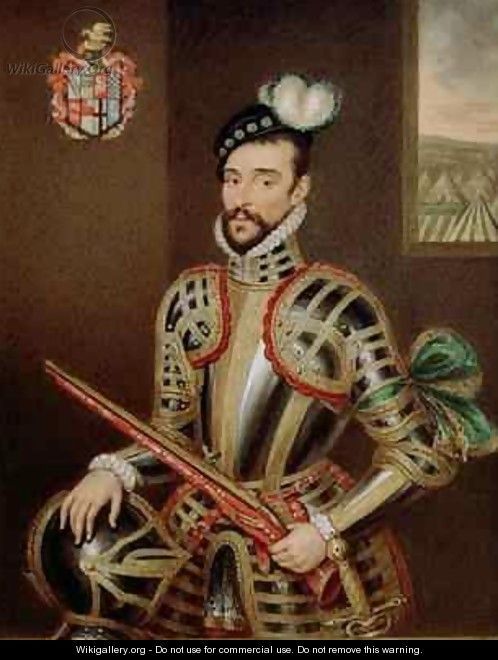
His brother William, a man whose gap years’ travels took him as far as Türkiye, became his landless successor. In May, the widowed countess wrote to Cecil:
I hope my lord your father's wonted favour will not be drawn from me by any means or persuasions, albeit I hear of a motion of marriage between the Earl, my brother, and my lady Very, your niece, but how true the news is I know not, only I wish her a better husband.
On 26 January 1595 when it was clear that that the countess could not be carrying a boy child, the new earl married Burghley’s granddaughter and Cecil’s niece, Elizabeth de Vere, in the presence of the queen at Greenwich Palace. It is said that Shakespeare’s play A Midsummer Night’s Dream was performed during the wedding festivities.
The marriage fulfilled at least one of the Cecil family’s ambitions for if the queen named William as her heir, the new countess would be queen consort, and if they had a son, one day a man with the Cecil’s bloodline might be king of England.
The Calendar of State Papers contains a declaration by one Henry Young, who testified in August 1594 that Captain Yorke, who was a prisoner:
believed the lord treasurer had poisoned the young Earl of Derby to marry the lady Vere to the Earl’s brother, England being governed by the Machiavellian policy of those who would be Kings, and whom it is time to cut off.
There is also an earlier declaration made by another prisoner, William Kinnersley, in March 1591. He said of Lord Burghley, ‘the Lord treasurer was the wizard of england, a wordling to fill his own purse, and good for nobody, and so hated that he would not live long, if anything happened to the Queen.’

Maybe that was Lord Burghley’s dream; Robert Cecil was more pragmatic. Now that the Catholic choice had been sabotaged for the moment, the top runner for him was the Protestant King James VI of Scotland and Cecil assured James that the throne would be his. When James succeeded Elizabeth in 1603, Cecil became his chef minister.
Of course, Ferdinando’s excruciating death might not have been sinister, unrelated to arsenic or dried Deathcap mushroom. Perhaps he suffered some acute organ condition. Unfortunately, we may never know because the symptoms and timing supplied by Stow do not add up to a clear diagnosis even for modern specialists. If he was murdered, there were others who had motives. Hesketh’s brother, Bartholemew had good reason. Lord Essex also had ambitions to overthrow Elizabeth and Ferdinando would have had a far better claim to the throne. As for his household, whoever placed the wax image in the earl’s bedchamber calculated that it would cause Ferdinando to believe he had been cursed and was consequently doomed to die.
Thanks to Stow, we know more about Ferdinando’s death than his life and it is sad that the man whose patronage enabled Spenser, Marlowe, and Shakespeare to flourish, is now mostly a footnote in history texts, yet Richard III is still being performed worldwide. What a legacy!
Isolde Martyn’s latest historical novel The April King, published by Sapere Books, deals with the circumstances leading up to the Earl of Derby’s death.